Wheeled vs Track: Picking the Right Used Skid Steer
SkidInfo Team 7 min read
## Wheeled vs Track: Picking the Right Used Skid Steer
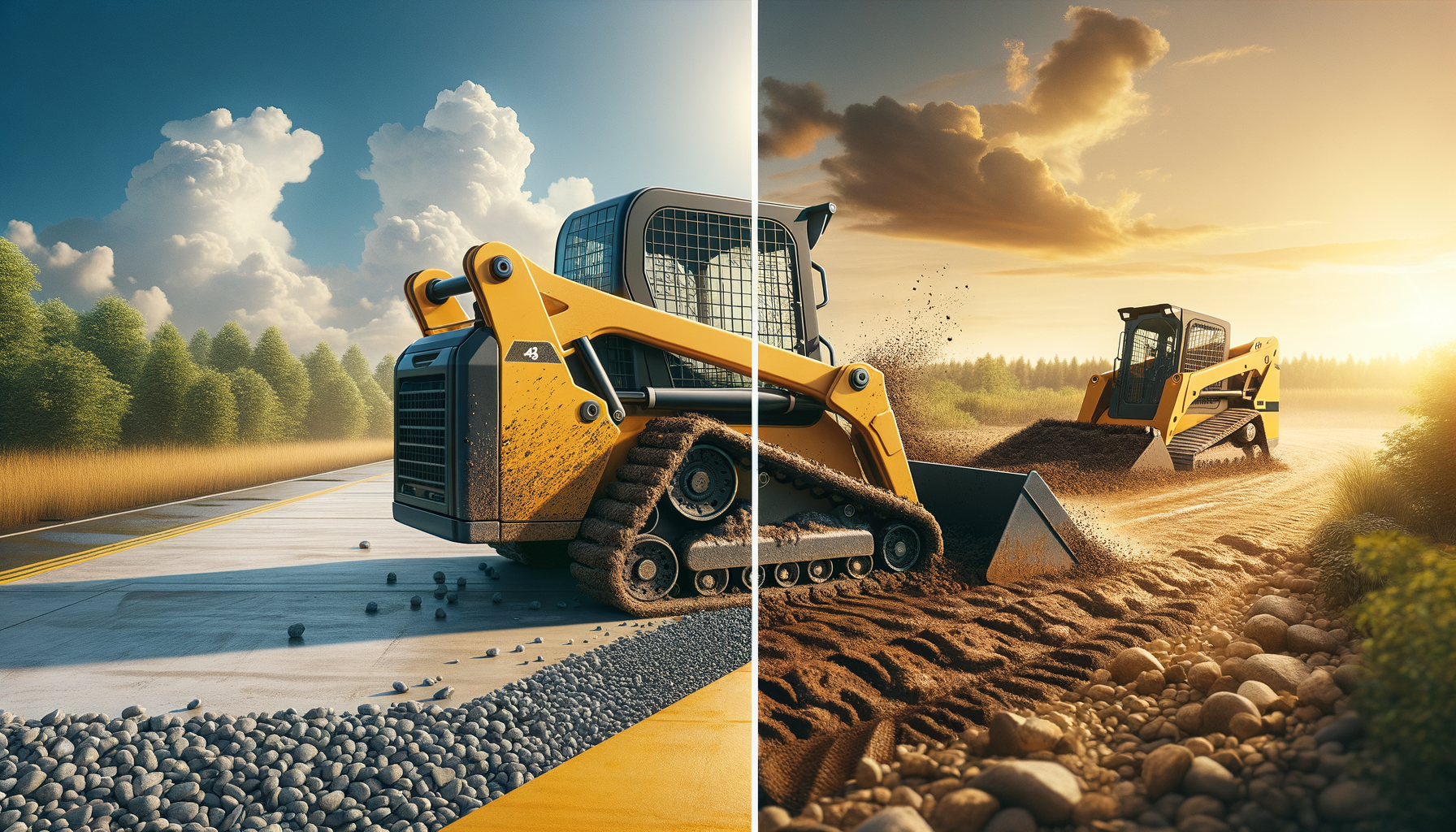
If you've spent any time browsing listings for a skid steer used on job sites across the country, you already know the first fork in the road: wheels or tracks? It sounds like a simple question, but the answer shapes everything from your daily fuel costs to how much that machine is worth five years from now. I've watched contractors agonize over this decision, and I've seen plenty of buyers nail it on the first try — usually because they matched the machine to the work, not the other way around. Whether you're a landscaper tearing into a soggy backyard regrade or a farmer who needs something nimble around the barn, this comparison will walk you through the real-world differences that matter when you're shopping for a used skid steer or compact track loader.
### At a Glance
| Feature | Wheeled Skid Steer | Compact Track Loader (CTL) |
|---|---|---|
| **Best Surface** | Hard, flat (concrete, asphalt, gravel) | Soft, uneven (mud, sand, slopes) |
| **Ground Pressure** | 30-35 PSI | 4-6 PSI |
| **Travel Speed** | Faster (up to 12 mph) | Slower (7-10 mph) |
| **Turning Radius** | Zero-radius pivot | Wider, less aggressive turn |
| **Purchase Price (Used)** | Lower ($15,000-$35,000 typical) | $6,000-$9,000 premium over wheeled |
| **Undercarriage Maintenance** | ~$2/hr (tires) | ~$10/hr (tracks) |
| **Lifting Capacity** | Moderate | Higher, thanks to better weight distribution |
| **Resale Depreciation** | Faster after 1,000 hrs | Slower, holds value better |
### Traction and Terrain
Imagine this: you pull onto a site after three straight days of rain. The lot is a swamp. A wheeled skid steer on that ground? It'll spin, dig ruts, and maybe get stuck before you've moved ten yards. Now picture a compact track loader rolling across that same mud — the tracks spread the machine's weight across a much larger footprint, dropping ground pressure to as low as [4 PSI compared to 30+ PSI on wheels](https://www.bigrentz.com/blog/skid-steer-vs-track-loader). The CTL floats where wheels sink.
That's the headline advantage for tracks: they dominate soft, loose, and uneven terrain. Sand, mud, wet clay, snow — tracks handle all of it with authority. For landscapers working freshly graded lots or farmers crossing pasture after a thaw, a tracked machine means you actually get work done instead of fighting the ground.
But here's the flip side. If your skid steer used to spend most of its hours on concrete pads, gravel yards, or paved surfaces, wheels are the smarter pick. They roll faster, cause less surface damage, and won't chew up a client's driveway. A contractor running a wheeled machine around a warehouse floor or a municipal yard will get better performance and fewer headaches.
### Speed and Maneuverability
Picture a tight residential job — maybe you're moving pallets of sod through a side yard with a six-foot gate. A wheeled skid steer can pivot on a dime with true zero-radius turning. You spin the machine in its own footprint, thread through narrow gaps, and zip between the truck and the work zone at speeds up to 12 mph. It feels responsive and quick.
Track loaders are wider, heavier, and top out around 7-10 mph. They turn well, but it's a different feel — less snappy, more deliberate. On a big open site that doesn't matter much. But if you're hopping between multiple addresses in a single day or working cramped commercial spaces, that speed and agility difference adds up fast.
I knew a fence contractor who switched from tracks to wheels specifically because he was doing 6-8 residential installs a week. The wheeled machine loaded and unloaded faster, drove between spots quicker on the trailer, and carved through tight backyards with ease. For his workflow, wheels were the clear winner.
### Maintenance and Operating Costs
This is where the math gets real, and it's something every buyer shopping for a skid steer used should study carefully. Tire replacement on a wheeled machine runs roughly $2 per operating hour. A set of four skid steer tires might cost $800-$1,500 and last 600-1,000 hours depending on the surface. You can swap them yourself with basic tools.
Tracks are a different story. [Undercarriage costs on a CTL run closer to $10 per hour](https://compactequip.com/skid-steers/vs-skid-steer-vs-track-loader-tires-vs-tracks-radial-vs-vertical-standard-vs-high-flow/), and a full track replacement can easily hit $3,000-$5,000 per side. Rubber tracks typically last 1,200-1,600 hours. On top of that, the rollers, idlers, and sprockets in a track undercarriage all wear and need eventual replacement. The total annual maintenance bill on a CTL can run $1,000 or more above what you'd spend keeping a wheeled machine running.
Fuel consumption is close between the two in similar-class machines, but the heavier CTL does burn slightly more in most conditions. Over the life of the machine, the operating cost gap between wheels and tracks is significant — sometimes enough to justify the lower purchase price of a used wheeled skid steer even if you occasionally wish you had tracks.
### Resale Value
Here's an interesting twist. Even though compact track loaders cost more to buy and maintain, they tend to hold their value better on the used market. Demand for CTLs has surged over the past decade — they now account for over 70% of combined skid steer and CTL sales in the U.S. That sustained demand props up resale prices.
A wheeled skid steer used for 1,000 hours might sell for 50-65% of its original price. A comparable CTL at the same hours often retains a slightly higher percentage, partly because buyers expect to pay the premium and partly because the used track loader pool can't keep up with demand.
That said, if you're buying used on a budget, the wheeled skid steer's lower entry price is a real advantage. You can pick up a solid, low-hour wheeled machine for $15,000-$25,000 — money that might only get you a high-hour CTL. For a startup operation watching every dollar, that math matters. Check our [complete guide to used skid steer costs](https://skidinfo.com/used-skid-steer-loader-cost) for detailed pricing breakdowns by brand and age.
### Who Should Choose What
**Go with a wheeled skid steer if you:**
- Work primarily on hard surfaces (concrete, asphalt, compacted gravel)
- Need top speed and tight-quarters maneuverability
- Want lower purchase and maintenance costs
- Load trucks, move pallets, or work in warehouses and shop yards
- Are starting a business and need to keep capital costs down
**Go with a compact track loader if you:**
- Work on soft, muddy, or uneven terrain regularly
- Need maximum pushing power and lifting capacity
- Do land clearing, grading, or work on undeveloped lots
- Operate in northern climates with snow and freeze-thaw cycles
- Value slower depreciation and strong resale
**Consider renting before committing.** If your work splits evenly between hard and soft ground, rent both types for a week each before locking in a used purchase. The operating feel on your specific sites will tell you more than any spec sheet.
### Conclusion
There's no universal winner between wheeled skid steers and compact track loaders — only the right answer for your ground, your work, and your budget. Wheels win on speed, cost, and hard-surface performance. Tracks win on traction, stability, and terrain versatility. The best move when shopping for a skid steer used is to be brutally honest about where and how you'll run the machine 80% of the time, then buy for that reality. Match the undercarriage to your conditions, keep up with maintenance, and either platform will earn its keep for years.