FRAME SIZE CATEGORIES
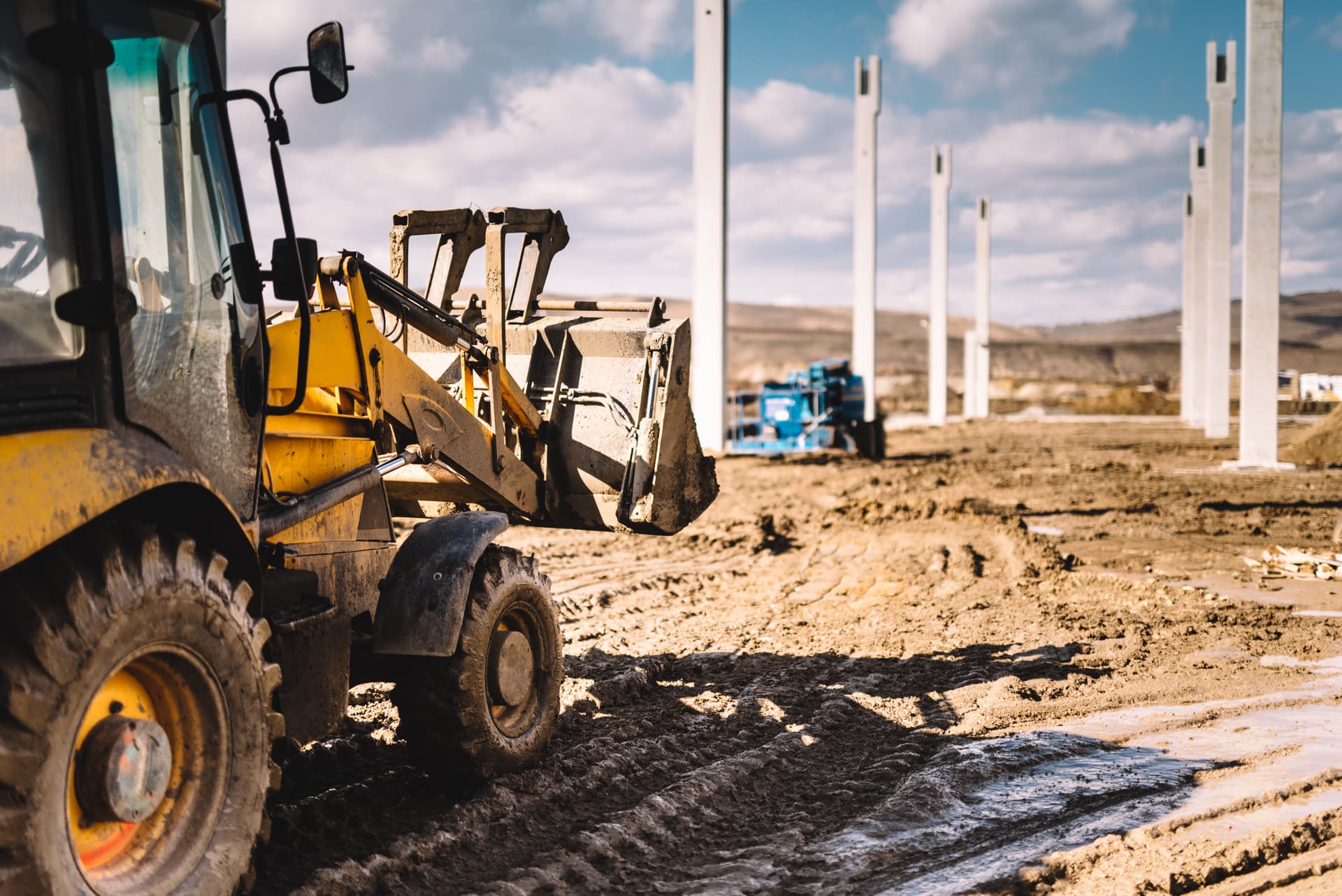
Skid steers are grouped into four frame sizes based on their rated operating capacity and engine power.
Small Frame
- ROC
- Under 1,750 lbs
- Horsepower
- Under 50 HP
- Operating Weight
- ~4,200 lbs
- Wheelbase
- 36"
Ideal for tight residential spaces, light grading, and small landscaping projects.
Medium Frame
- ROC
- 1,750–2,200 lbs
- Horsepower
- 50–70 HP
- Operating Weight
- ~6,400 lbs
- Wheelbase
- 40"
The versatile workhorse — handles general construction, material handling, and most landscaping tasks.
Large Frame
- ROC
- 2,200–3,000 lbs
- Horsepower
- 70–90 HP
- Operating Weight
- 8,400–9,100 lbs
- Wheelbase
- 48"
Built for heavy excavation, demolition, large-scale earthmoving, and high-demand attachments.
Heavy-Duty
- ROC
- Over 3,000 lbs
- Horsepower
- Over 90 HP
- Operating Weight
- 9,300–11,665 lbs
- Wheelbase
- 48"+
Machines like the Bobcat S86 and Case SV340B that rival the performance of larger wheel loaders. Road work, large-scale site prep.
Wheeled Skid Steers
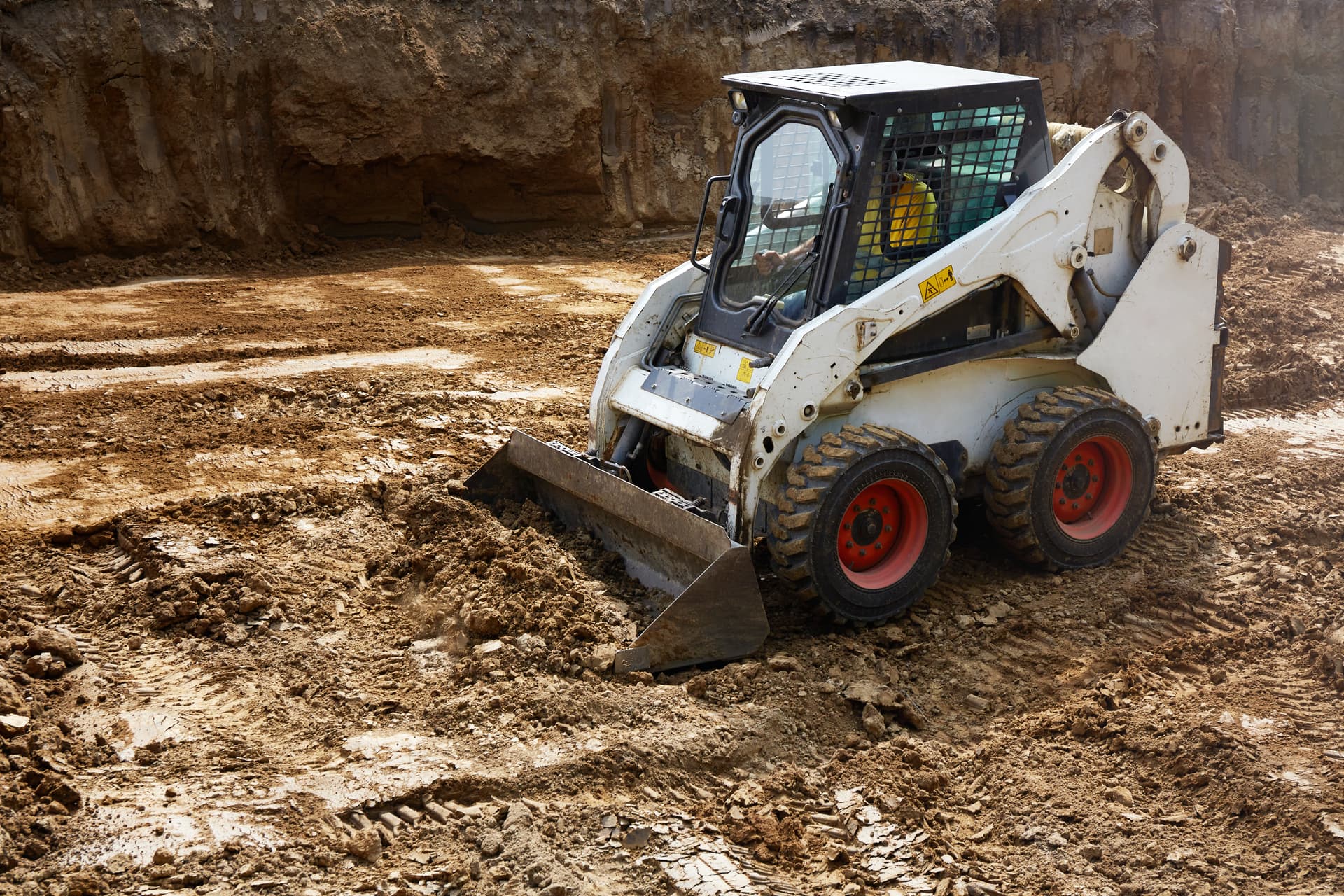
Wheeled skid steers are the original and most recognizable type. They use four pneumatic or solid rubber tires and steer by varying the speed of wheels on each side — hence "skid" steer. They're faster, more maneuverable, and cheaper to operate than tracked alternatives.
Best Applications
- Hard, developed surfaces — concrete, asphalt, compacted gravel
- Indoor work — warehouses, barns, enclosed structures
- Snow removal — wheels grip through snow rather than floating on top
- Tight urban job sites where speed and maneuverability matter
Compact Track Loaders
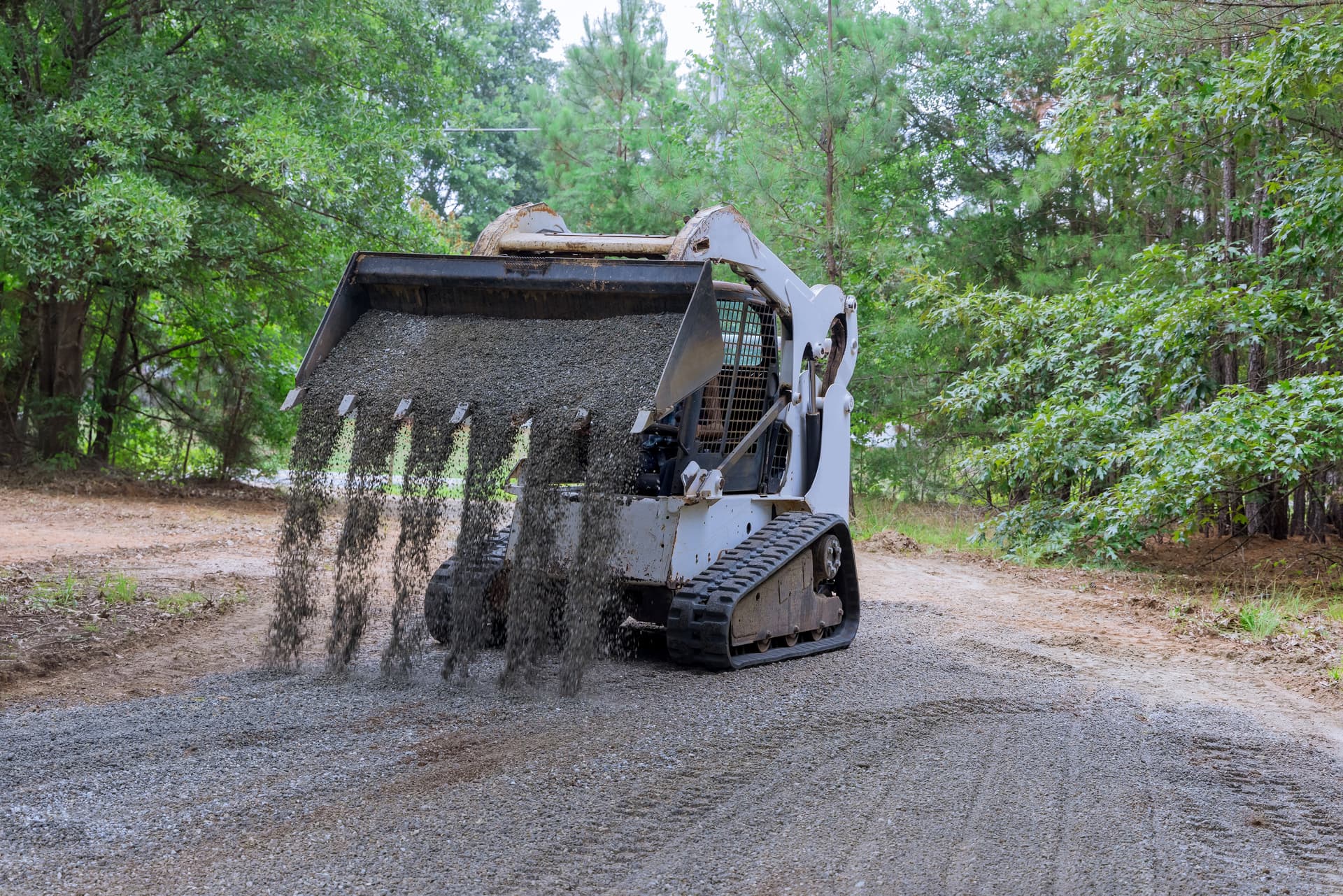
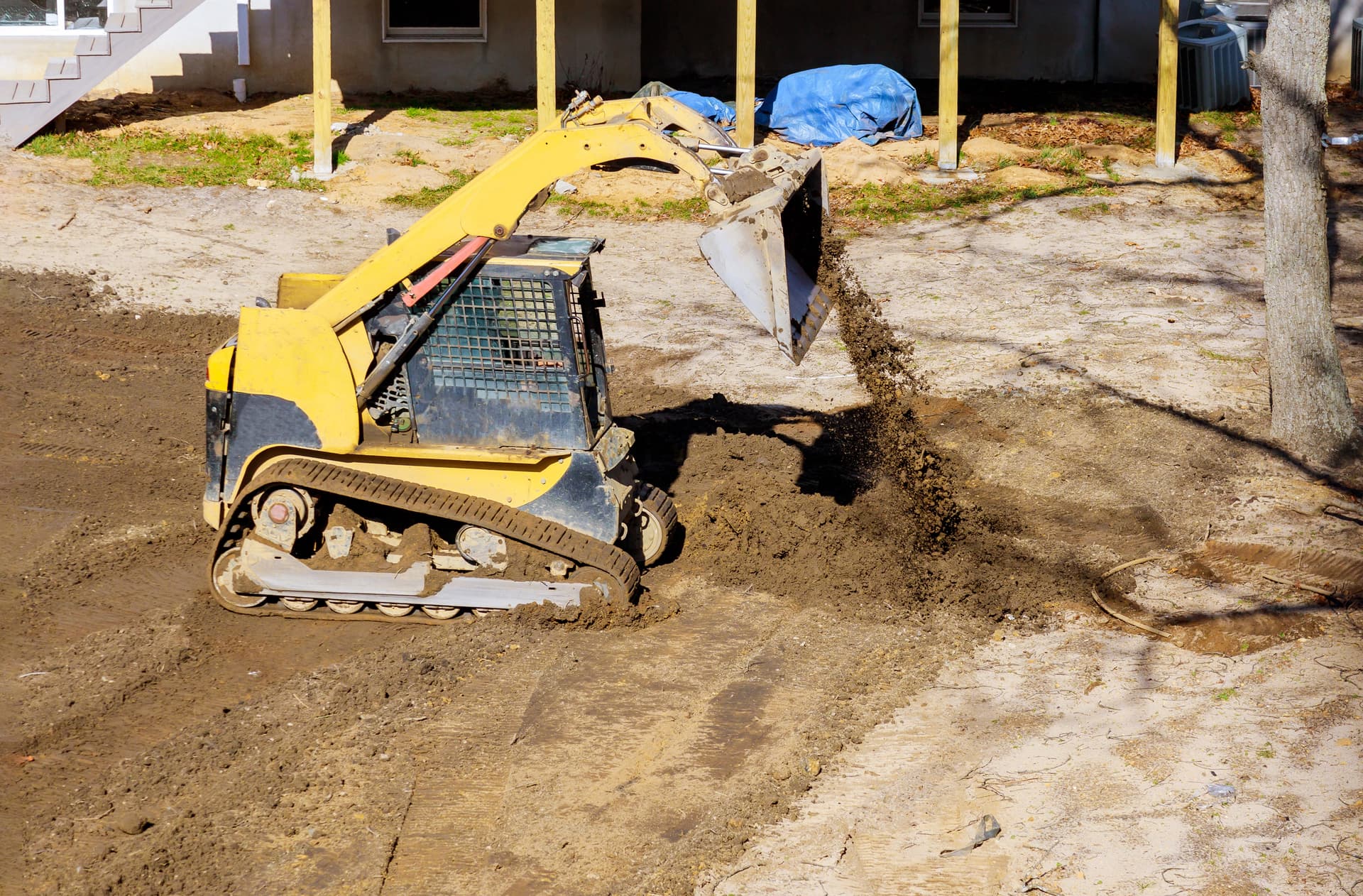
Compact track loaders (CTLs) replace wheels with rubber tracks, distributing weight over a much larger surface area. With ground pressure as low as 4–6 psi, they can operate on soft, wet, and uneven terrain where wheeled machines would sink. They offer more lifting power and stability, but at higher maintenance costs and slower travel speeds.
Best Applications
- Soft, wet terrain — mud, sand, clay, marshy ground
- Slopes and uneven ground — tracks prevent slipping and reduce tip-over risk
- Heavy-duty lifting — more weight distribution equals more stability under load
- Landscaping on turf — low ground pressure minimizes lawn damage
Mini Skid Steers
Mini skid steers — also called compact utility loaders (CULs) — are stand-on or walk-behind machines that fit through standard gates and doorways. First introduced in 1981 in Australia, they evolved from motorized wheelbarrows into powerful multi-purpose tools. They offer an exceptional power-to-weight ratio, handling tasks that would otherwise require multiple workers.
Available in both wheeled and tracked configurations, mini skid steers accept a wide range of attachments including buckets, augers, trenchers, pallet forks, and mowers. The trend toward electrification is making them increasingly viable for indoor and noise-sensitive work, with some manufacturers offering fully electric and remote-control models.
Best Applications
- Residential landscaping — fits through gates, won't damage lawns
- Fence post installation, tree planting, trenching for utilities
- Indoor work — electric models produce zero emissions and minimal noise
- Addressing labor shortages — one operator replaces multiple manual workers
KEY SPECIFICATIONS EXPLAINED
Understanding these specifications is critical for comparing machines and choosing the right one for your work.
Rated Operating Capacity (ROC)
The maximum weight a machine can safely lift and carry, calculated as 50% of the tipping load. This 2:1 safety margin prevents tip-over. Machines range from 760 lbs (compact models like the Bobcat S70) to 4,200+ lbs (heavy-duty models like the GEHL 420V).
Operating Weight
Total weight of the machine with full fluids, standard bucket, and operator. Ranges from ~4,200 lbs (small frame) to 9,100+ lbs (large frame). Heavier machines provide more stability but require larger trailers to transport.
Horsepower (HP)
Engine power output, typically ranging from 23 HP (small compact) to 120 HP (large frame). More HP means faster cycle times and the ability to power demanding attachments like mulchers and cold planers.
Width
Overall machine width, ranging from 35.5 inches (Bobcat S70, narrowest) to 79 inches (large models). Critical for determining which spaces the machine can access — narrow models fit through standard doorways and gates.
Ground Pressure
Weight distributed per square inch of ground contact. Wheeled skid steers: 35–45 psi. Track loaders: 4–6 psi. Lower ground pressure means less surface damage and better flotation on soft terrain.
Hydraulic Flow Rate (GPM)
Gallons per minute of hydraulic fluid the auxiliary circuit can deliver. Standard flow: 15–22 GPM (buckets, grapples, augers). High flow: 22–45 GPM (mulchers, cold planers, large snow blowers). Super high flow: 45+ GPM (specialized commercial-grade industrial tools). Selecting the correct flow tier is critical for attachment performance.
Largest skid steers available: The GEHL 420V and Manitou V4200 top the charts with a 4,200 lb ROC and 11,665 lb operating weight — they share the same parent company and engineering platform.
Know What You Need?
Compare the top brands side by side or read our complete buying guide to make the right choice.